Starting an online business? Don't spend it all on stock
Starting an online business? Learn how to budget for your launch so you have money for ads, content and marketing, not just stock and shipping.
Published . 6 minute read.
On this page
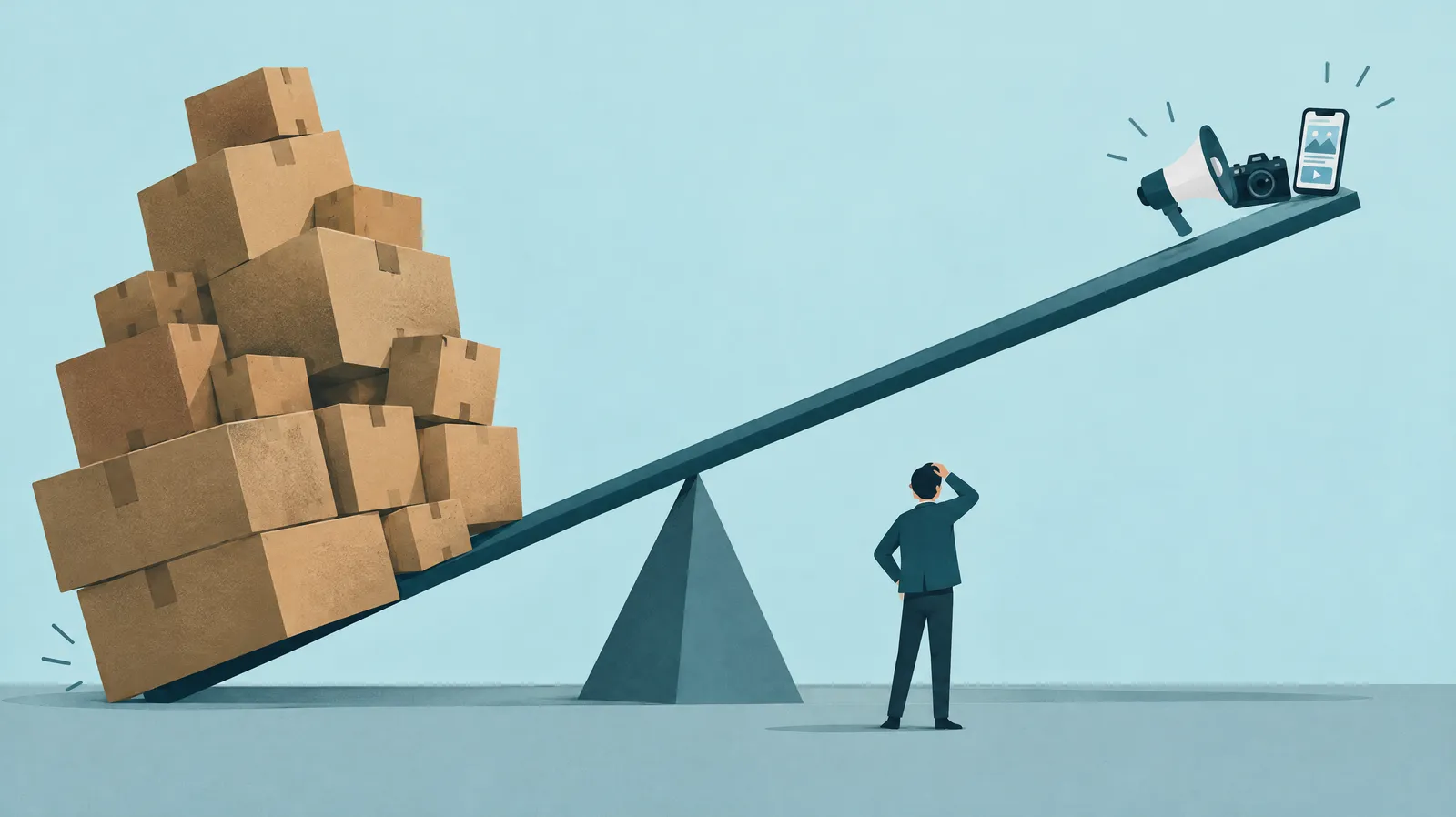
If you are starting an online business, here is the most expensive budgeting mistake I see, and it is easy to avoid: spending almost all of your money on making the product, and almost none on getting people to buy it.
A product nobody hears about does not sell, however good it is. So before you place your manufacturing order, set a marketing budget for your new business: decide how much you will spend on reaching customers, and protect that money as carefully as you protect your stock budget.
A story I watched happen
I once worked with a brand that did a lot of things right. The product was good. The packaging was beautiful. They found a reliable manufacturer, put their branding on everything, and paid for shipping to get the stock to where it needed to be.
That is where the money went: manufacturing, branding and logistics. Almost all of it.
What they did not budget for was everything that happens after the boxes arrive:
- Ads to put the product in front of people who had never heard of the brand
- Models and content to show the product being used and make people want it
- PR, creators and press to give the brand credibility
- A marketing strategy that set out who the customer was, where to reach them and what to say
- A marketing budget set aside to pay for all of it
So launch day came, the store went live, and the hard part began. The brand had beautifully branded stock and very few people who knew it existed. With the money already spent, there was nothing left to change that quickly.
I am not sharing this to criticise them. This is the most natural mistake in the world, and I have seen it more than once. But it is worth understanding why it happens, because then you can plan around it.
Why this happens to good founders
The product feels like the business. You can hold it, photograph it and show it to friends. Marketing feels vague by comparison, so it is easy to treat it as something you will sort out later.
"A good product sells itself." It rarely does online. Your customers are scrolling past thousands of other products every day. Being good is the entry ticket; being seen is the job.
Launch day feels like the finish line. In reality, it is the start line. Everything before launch is preparation. Everything after launch is selling, and selling costs money.
Online business startup costs most founders forget
When people list their online business startup costs, these are the lines that are usually missing.
Ads
Paid ads on Instagram, Facebook and TikTok are how most new online brands get their first customers. You will need money to test, because the first ads you run will not be the best ones. Testing means paying to find out which product, image, message and audience actually sells.
Models, photography and content
People buy what they can picture themselves using. That means good product photos, images of the product in use, short videos, and content for your page before and after launch. Phone photos on a white sheet will not compete with brands that have invested here.
PR, creators and credibility
New brands have no reviews, no word of mouth and no reputation yet. Creators, influencers, press mentions and early customer reviews borrow credibility while you build your own.
Strategy
Before spending on any of the above, you need a plan: who exactly is your customer, where do they spend time online, what problem does your product solve for them, and why should they choose you? Without this, ad money gets spent guessing.
Running costs after launch
Your store, customer replies, delivery issues, returns and restocking all continue after launch day. Marketing has to keep going too. One burst of ads in launch week is not a strategy.
How to budget for starting an online business
Here is the approach I recommend to founders: work backwards from sales, not forwards from stock. It leaves fuel in the tank for selling after launch day.
1. Start with how many sales you need
Decide how many units you need to sell in your first three months to keep going. That number shapes everything else.
2. Estimate what it costs to win a customer
You will not know this exactly until you test, but you can start small: run modest ads before or right after launch and see what it costs to get a sale. This is the most important number in your business.
3. Order stock to match what you can afford to sell
Here is a simple illustration. These numbers are made up, just to show the thinking:
Say your budget is 10 units of money. If you spend 9 on stock and 1 on marketing, you might have plenty of products and nobody to buy them. If you spend 6 on a smaller first batch and keep 4 for content and ads, you sell through your first batch, learn what works, and reorder with confidence.
A smaller first production run often feels risky. In practice, being left with unsold stock and no marketing money is far riskier.
4. Ring-fence your marketing money
Put your marketing budget in a separate account before you place your manufacturing order. If it sits in the same account as everything else, it will get spent on "just one more" production cost.
5. Plan for at least three months after launch
Most brands do not find their winning ad, message or audience in the first week. Budget so you can keep marketing for at least three months after launch, adjusting as you learn.
Where you can save without cutting corners
Being careful with money does not mean skipping marketing. It means spending smarter.
- Order a smaller first batch. Prove demand first, then scale production.
- Build an audience before the stock arrives. Share the journey, collect a waitlist and start conversations months before launch day. Pre-launch attention is the cheapest attention you will ever get.
- Use AI for product photography and content. AI product photography and model images and UGC-style video ads can cost a fraction of a traditional photoshoot. At TheClef we have produced AI campaign images and AI UGC ads for a UK wellness brand, and for a new brand this can free up real money for ads.
- Test before you scale. Spend small amounts to learn what works, then put more money behind the winners.
A pre-launch checklist
Before you place your manufacturing order, check that you can answer yes to these:
- I know who my customer is and where they spend time online
- I have a marketing budget, separate from my stock budget
- I have money for ads to test and learn, not just for launch week
- I have a plan for product photos, models or content
- I have a way to build credibility early (creators, reviews or press)
- I can keep marketing for at least three months after launch
- My first stock order matches what I can realistically sell
If you cannot tick most of these yet, you are not behind. You have just found out at the cheapest possible moment: before the money is spent.
Frequently asked questions
How much of my budget should go to marketing?
There is no single right figure; it depends on your product, your margins and how quickly you need to sell. The safer way to decide is to work backwards: estimate how many sales you need, test what a sale costs you in ads, and make sure your marketing budget can cover that for at least three months.
Should I order stock before or after I start marketing?
Start building attention before your stock arrives. Share the journey, collect a waitlist and test small ads early. Then order a first batch that matches the demand you can see.
Can I launch an online business without paid ads?
You can, but it is usually slower. Content, creators, PR and word of mouth can bring your first customers. Most brands that grow quickly combine them with paid ads once they know which messages work.
Planning a launch?
If you are getting ready to start an online business, we can help you plan it properly from day one: the strategy, the online store, the content and the ads, so your budget works for you after launch day as well as before it. Book a free discovery call and tell us what you are building.